

Healing Humanity
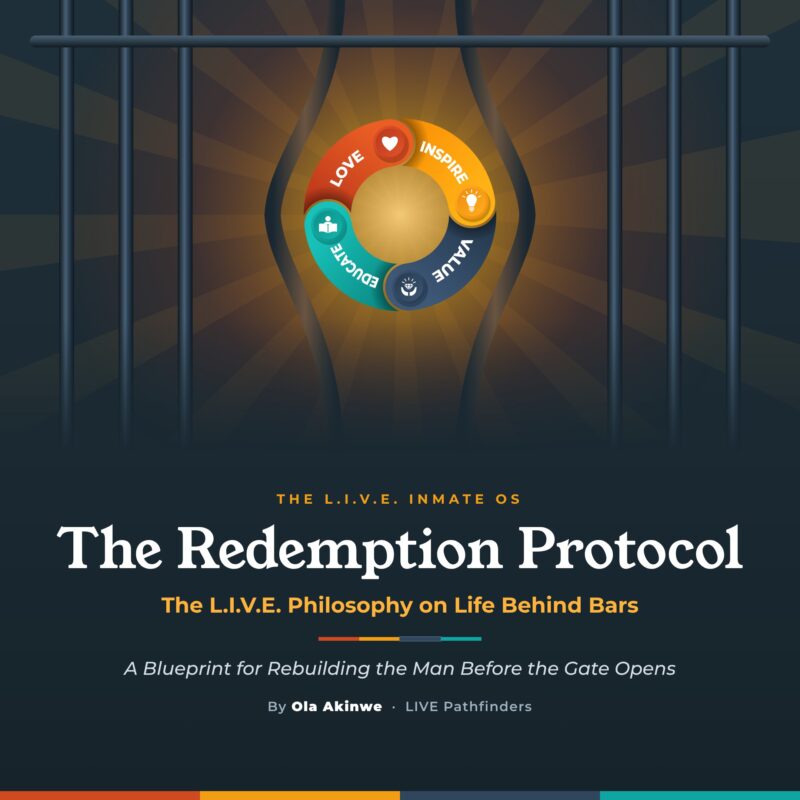
The Redemption Protocol: The L.I.V.E. Philosophy on Life Behind Bars. A Blueprint for Rebuilding the Man Before the Gate Opens
Early one weekday morning, a gate opens somewhere in Nigeria and a young man walks out. He carries a nylon bag, wears the clothes he was arrested in, and has a few hundred naira in his pocket. Nobody is waiting for him. By nightfall he is back on the same street corner, with the same boys who never stopped calling his phone. Too often, the next time his family hears his name, it is from inside again.
I have spent years working with boys before they reach that gate. This article is about the men who have already passed through it.
Nigeria’s custodial centres hold more than 79,000 people. Almost 98 in every 100 are men, and about two in three have not yet been convicted; they are waiting for a court date that keeps moving. Some will wait for years.
A prison sentence takes away a man’s freedom. On its own, it does not give him a new way to think, choose or earn a living. We build strong walls and count heads twice a day, and then we act surprised when the man who walks out is the same man who walked in.
Inside those walls, all four shadows of E.V.I.L. are at full strength. A man starts to believe his life is finished and to hate himself for it (Loathing). Every decision, down to when he eats and sleeps, is made for him until his own judgement grows weak (Inhibition). He is called by a number and spoken of as a criminal, until he begins to answer to it (Vilification). And the yard runs on a hard economy of protection, debts and favours, where weakness is something to be traded (Exploitation).
The L.I.V.E. philosophy cannot shorten a sentence or undo what was done. What it can do is put the time to work. That is the purpose of The Redemption Protocol: The L.I.V.E. Inmate OS, a 24-week programme delivered inside the custodial centre, with 12 months of support after release.
Pillar 1: LOVE (The Antidote to Self-Hatred)
The Shadow Behind Bars: Ask a man in a cell what his future holds and you will often get a shrug. He has made peace with being finished. That quiet self-hatred is more dangerous than any gang, because a man who believes his life is already over has no reason to guard it.
The L.I.V.E. Blueprint for the Man Inside
- A Room Where the Yard Stops: each session opens what we call the De-Militarised Zone. For two hours, gang ranks, debts and old quarrels stay at the door, and a man can say something true without paying for it later.
- Three Honest Questions: What happened? Is that who you want to be? What is the fix? A man learns to look at his choices without excusing them and without drowning in them. The fix always includes making right what he can with the people he hurt.
- Five Men Who Notice: every participant joins a Brotherhood Circle of five or six men. When someone misses a week or slips back, his circle is the first to ask why.
Pillar 2: INSPIRE (The Antidote to the Institutionalised Mind)
The Shadow Behind Bars: After a few years of being told when to stand, sit, eat and sleep, a man forgets how to decide for himself. Even the phrase we use, “doing time”, tells him the days are something to get through. Then one morning the gate opens and a hundred decisions arrive at once.
The L.I.V.E. Blueprint for the Man Inside
- Count the Hours: each man keeps a simple ledger of the hours he spends learning, exercising, praying or reflecting, building a skill, serving others and staying in touch with family. Time stops being a sentence and becomes something he spends on purpose.
- Picture an Ordinary Tuesday: every man writes down what a normal Tuesday looks like ten years after his release: where he wakes up, what work he goes to, who sits with him at dinner. Then he works backwards to what must happen in three years, one year and the first 90 days. If a man has a destination, he will rebuild the ship to get there.
- Write Home: each man drafts a letter to a child, a parent or a partner about the man he is becoming. Whether he sends it is his decision alone.
Pillar 3: VALUE (The Antidote to the Label)
The Shadow Behind Bars: From arrest to release, the system speaks about a man in one word: criminal. Officers call out his number. Newspapers call him a suspect or a convict. Repeat a label long enough and a man starts to live up to it, because it is the only identity anyone has offered him.
The L.I.V.E. Blueprint for the Man Inside
- Use His Name: in our sessions nobody is called an inmate. A man starts as a Participant, becomes an Architect as he rebuilds, and leaves as an Operator.
- Audit the Street Skills: a boy who ran goods across Lagos without losing a parcel understands logistics. A boy who kept a crew loyal understands leadership. We help each man list what he was genuinely good at and give it its proper, legal name.
- Stack Them: those raw abilities are paired with something new from the centre’s workshops or our partners, such as carpentry, tailoring, coding, farming or writing. The result is an offer someone will pay for. His past stops being wasted years and becomes material he can build with.
Pillar 4: EDUCATE (The Antidote to the Yard Economy)
The Shadow Behind Bars: Every yard has its own market. Protection is bought, debts are collected, and the weak pay for the strong. A man who survives that system learns one lesson very well: take before you are taken from. He carries that lesson home.
The L.I.V.E. Blueprint for the Man Inside
- Pass It On: the Dead Sea receives water but gives none away, so nothing can live in it. Each man must teach at least two of the lessons he has learned to newer men, which turns him from a taker into a giver.
- Practise the Hard Moments: first pay day with five relatives asking for money. An old friend offering “one quick job”. A stranger looking for a fight at the bus stop. We rehearse these scenes inside, so the right choice is already familiar when they happen outside.
- Lead Something Small: men take turns as timekeeper, note-taker, circle leader and peer tutor. Small responsibilities, carried out every week, rebuild the judgement that years of confinement wore away.
The Road Past the Gate
Week 24 does not end with a certificate handed over in silence. It ends with a Re-Entry Commissioning. Families, officers and employers sit in the room while each graduate stands, describes the life he intends to build, and makes this promise:
I was a number; today I am a name. I will Love without condition, Inspire through action, Value every person I meet, and Educate the boy who walks the road behind me. I will not return. I am deployed.
When he walks out, someone will be waiting. A trained mentor meets him at the gate and stays with him for the next 12 months. And each graduate takes on one responsibility: to reach a younger boy before that boy follows him through the same gate.
Redemption does not erase the harm a man has caused. It asks him to spend the rest of his life repairing it.
How You Can Help
This work needs more than one organisation. If any of these describes you, we would like to hear from you:
- You lead a custodial centre or work in the justice system: host a pilot group of 25 men.
- You represent a company, foundation, church or mosque: sponsor a group, covering manuals, trained facilitators and a mentor for every graduate.
- You employ people: set aside one job or apprenticeship for a graduate.
- You have time and a steady life: train as a mentor and walk with one man through his first year outside.
- You know someone who could open a door: forward this article to them today.
Write to info@livepathfinders.com with “Redemption Protocol” in the subject line, call or WhatsApp +234 815 500 2255, or visit
To the men still inside, and to the mothers, wives and children counting the days: the story is not finished yet. There is still a destination, and the ship can still be rebuilt.
